
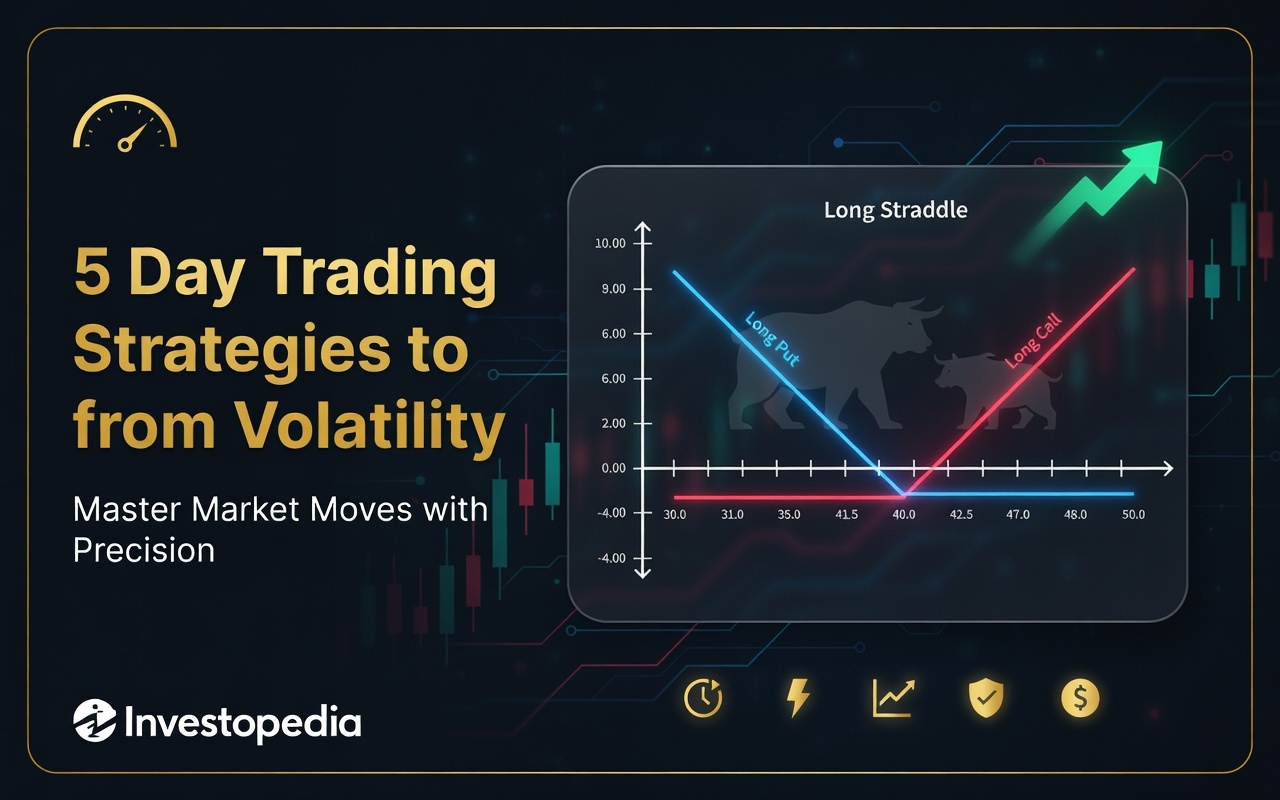
is se related image bnado horizontal feature image need imags bnana bht sbse best google per rank kre or eyecatching ho full
Introduction
To be a trader is to court volatility. While many long-term investors see volatility as a bad thing to be avoided, traders recognise that volatility, when well managed, is where the money is. When an asset is volatile, it can move up and down with sufficient speed and size to turn profits for traders who can accurately predict price movements.
However, only traders with smart strategies can profit from volatility. Those who approach the markets without a solid plan can become victims of volatility and lose their hard-earned money. In this article, we consider 5 strategies day traders can employ to master and profit from volatility.
1. Bollinger band reversals and breakouts
The bollinger band is one of the best trading indicators, especially when it comes to trading volatility.
There are two ways to use it to profit from volatility.
First, the tightening and widening of the gaps between bollinger bands is a signal of changing volatility and often a prelude to a trend change.
For example, when the gap between the upper and lower bands and the middle bands widens, a reversal can take place as an uptrend changes to a downtrend.
Second, when price breaks above the upper band or below the lower band, it is often the result of a rise in bullish or bearish volatility. Traders who pay attention to these volatility signs can profit from the incoming breakout.
2. MACD and RSI divergence
When the MACD and RSI indicators diverge from the price chart, it can be a sign of an upcoming price reversal. For example, if the MACD indicator is showing lower lows and lower highs (a downtrend), but the price chart is showing higher lows and higher highs (an uptrend), it can be a signal that a price reversal to the downside is imminent.
There are two ways to confirm if a reversal is likely.
First, the divergence must be matched by a spike in volume. If volume increases at the point of divergence, there is a likelihood that a reversal is possible.
Second, it must be matched by an increase in volatility. This can be confirmed by the average true range (higher ATR = higher volatility), the average directional index (higher ADX values = higher volatility), or the bollinger bands (expanding gaps).
When these two align with a clear divergence, there is a likelihood of a price reversal.
3. Mean reversion strategy
A mean reversion strategy assumes that the long-term relationship between two assets holds even after temporary divergences. For example, assume that the gold-silver ratio is historically between 90 and 100. If this ratio drops to 50, it can be a sign that gold is undervalued and silver is overvalued. The mean reversion trader can then go long on gold and short silver in anticipation of a reversal. When volatility is high, divergences from the mean and reversals to the mean tend to happen more frequently. This opens up more trading opportunities for mean reversion day traders.
4. Scalping and algorithmic trading
Scalping is another strategy that benefits from volatility.
When markets are volatile, intraday price changes are bigger and more frequent. Intraday traders have more opportunities to explore. In fact, they may not need to open and close as many trades as they would in low-volatility markets. Also, algorithmic trading profits from volatility, as traders find more opportunities to explore in the market.
5. Volatility-based position sizing
One of the most popular measurements of volatility is the average true range (ATR).
While it is not usually employed as a trading strategy, it is an important risk management tool. Traders use the ATR to set a trailing stop loss when they want to ride the full extent of a market trend instead of having a tight return-to-risk ratio (3:1 being the most popular). Also, many traders vary their position size based on market volatility: smaller positions in highly volatile markets and larger positions in calmer markets. This is especially useful for traders with low risk tolerance who want smaller exposure in less predictable markets.
In addition to exploring these strategies, you need to learn how to choose the best online trading platform in the UAE. The platform you choose can make or mar your trading experience. With a broker like Daman Markets, you can create multiple orders, set trailing stop losses, get insights into how macroeconomic conditions affect given assets, and conduct detailed sentiment and technical analysis.
You also gain access to personalised support, AI-powered research tools (Acuity Research Terminal), real-time prices, high liquidity, and educational resources. The best traders know how to explore opportunities in all types of market and Daman Market provides you with what you need to do exactly that.
About the Author
